OBD-based Fleet Monitoring System
Client
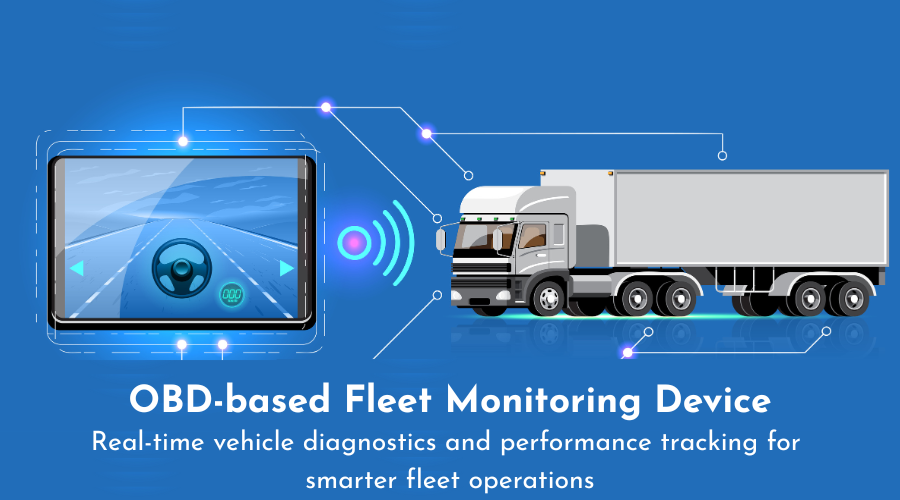
A technology firm specializing in digital logistics and fleet data solutions, to empower logistics businesses to make data-driven decisions and optimize performance across their supply chains. The goal was to monitor parameters like fuel level, vehicle speed, engine load in real time, and send the data to the cloud for fleet management and diagnostics.
Problem Statement
The client had developed a functional prototype device. The client approached Techshlok to audit their current device, identify faults in the hardware and software stack, and build a production-ready system capable of large-scale deployment.
Solution
- Redesign the hardware with a 4-layer PCB for enhanced signal integrity and stability.
- Implement a Real-Time Operating System (RTOS) to handle concurrent tasks like data acquisition, queuing, and MQTT communication.
- Add custom circuitry for over-voltage protection, reverse polarity protection, and temperature-resilient operation.
- Build support for fuel-level acquisition using direct analog wire connections and integrate that with CAN-based OBD data using a single-channel CAN architecture.
- Redesign the enclosure and thermal layout to prevent SIM card failure in high-temperature environments.
- Debug and refactor existing firmware for modularity, efficiency, and long-term stability.
Approach
- Prototype Design Review
During our evaluation of the hardware, we discovered the prototype built with a 2-layer PCB suffered from runtime errors, inconsistent performance, and system failures when deployed in remote locations. This not only increased retrieval and maintenance costs but also undermined the client's production readiness. Furthermore, the prototype lacked robustness, scalability, and thermal stability needed for real-world use across BS4, BS5, and BS6 vehicle platforms.
- Hardware Redesign
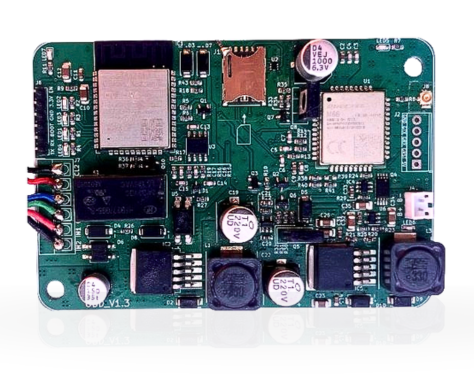
(PCB Design)
- Power Circuit Design
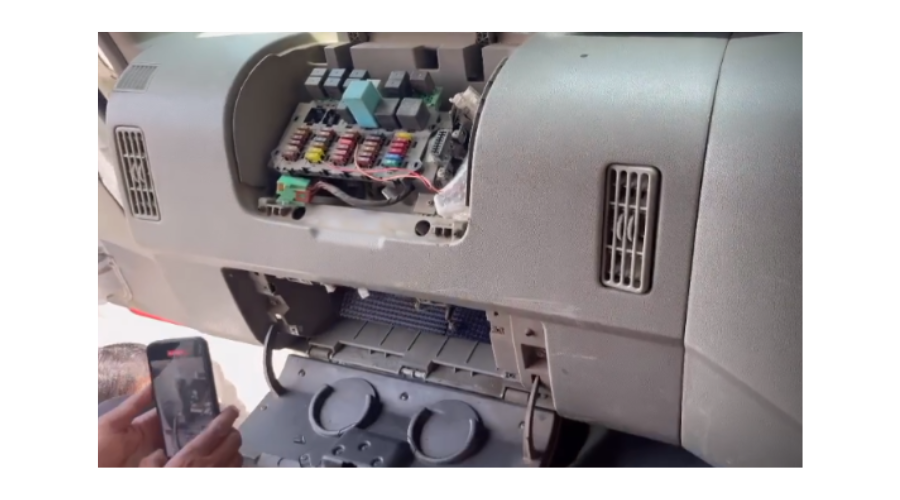
(Relay-based Control)
- Software Optimization
Transitioned the firmware to run on RTOS with independent task management for reading sensors, managing queues, and transmitting data. Implemented watchdogs, improved memory management, and filtered CAN messages to reduce processing load.
- Communication Protocol
Enabled real-time data transmission using the MQTT protocol via the in-device SIM slot. This ensured lightweight, low-latency communication with the cloud backend even in low-bandwidth regions.
- Thermal Enclosure Redesign
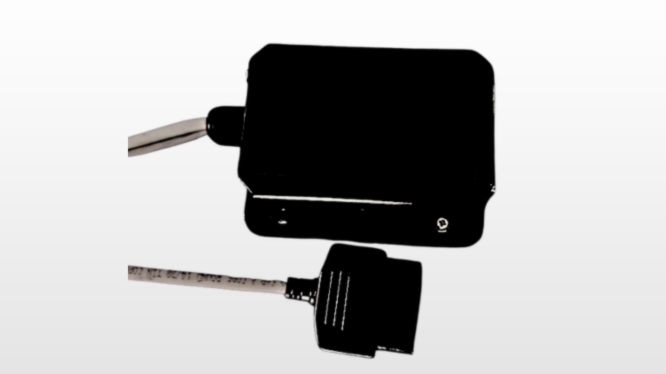
The SIM modules in the earlier prototype were failing at 60°C ambient temperatures. We redesigned the enclosure to incorporate a heat sink and passive airflow to mitigate overheating and protect internal components.
- Validation And Manufacturing Support
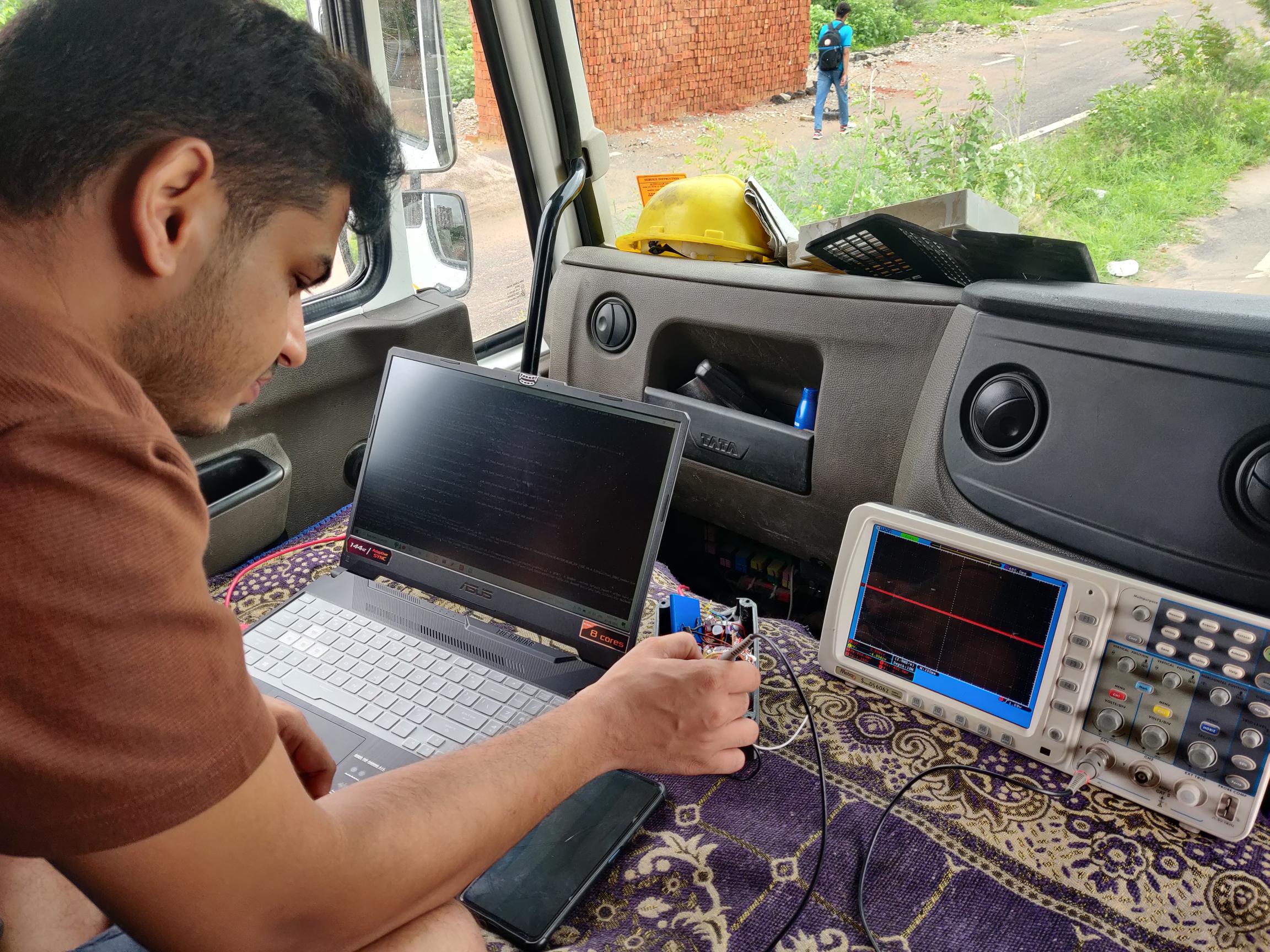
Result
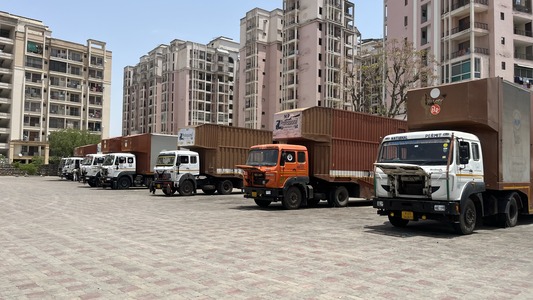
Techshlok successfully transformed the client’s proof-of-concept into a fully industrialized, reliable, and field-tested telematics solution. With real-time access to OBD and fuel data across BS4, BS5, and BS6 vehicle models, the client significantly improved their fleet data analytics capabilities. Key achievements included:
- Stable realtime data capture and MQTT transmission.
- Increased compatibility with older and newer vehicle models.
- Full thermal protection for SIM modules in extreme temperatures.
- Reduced hardware failure and maintenance costs.
- Productionready design with manufacturing support.
A future-proof, intuitive design with excellent engineering.
